Network request capture
Observe browser requests during page load and user interaction.
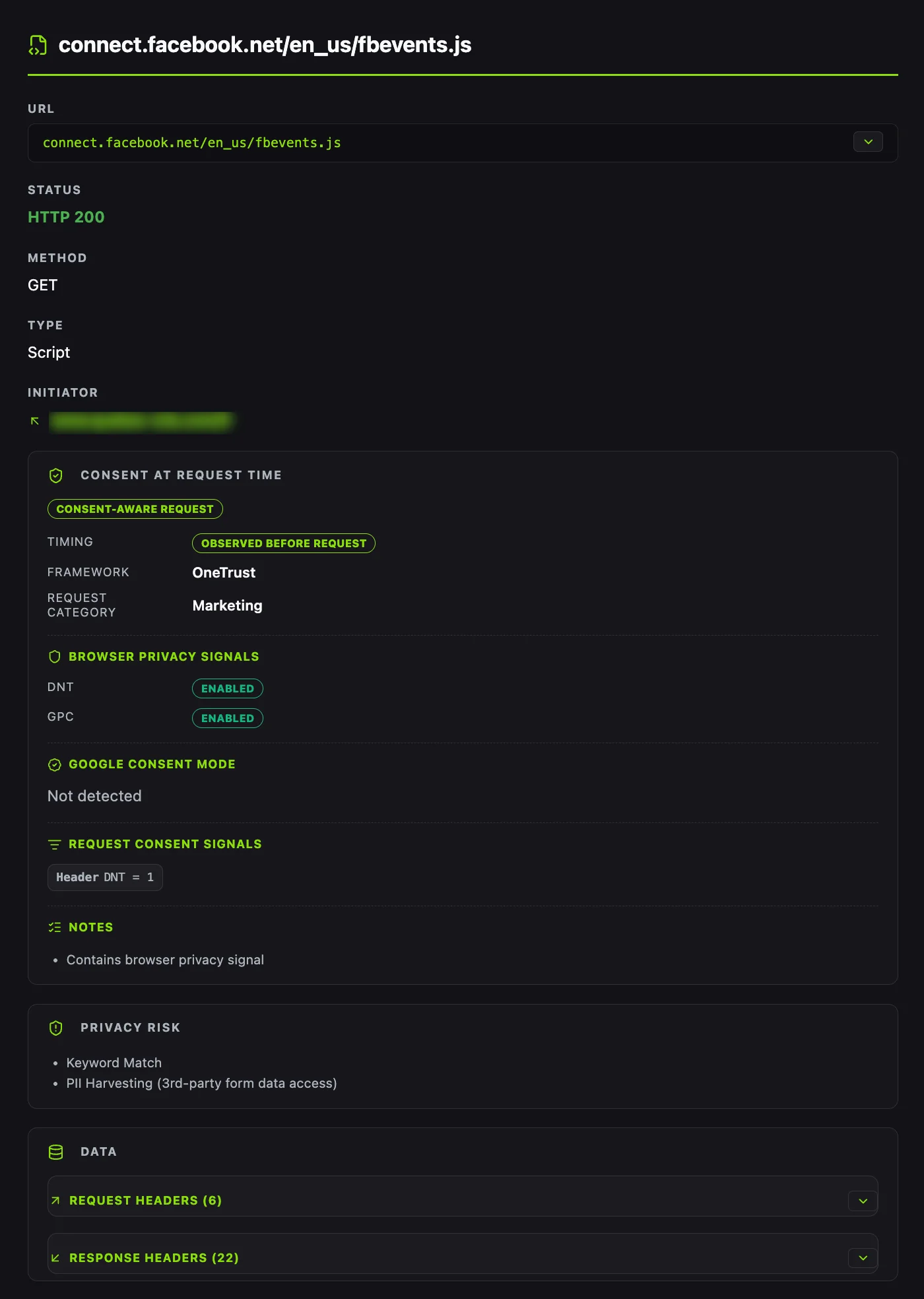
MANTIS turns browser request traffic into a structured view of what fired, why it fired, who is behind it, and where privacy audit risk may need review.
Live network request capture, request details, headers, payload context, and a basic timeline give analysts a working view of page behavior without relying on flat screenshots.
Observe browser requests during page load and user interaction.
Inspect request metadata, domain context, headers, and classification evidence.
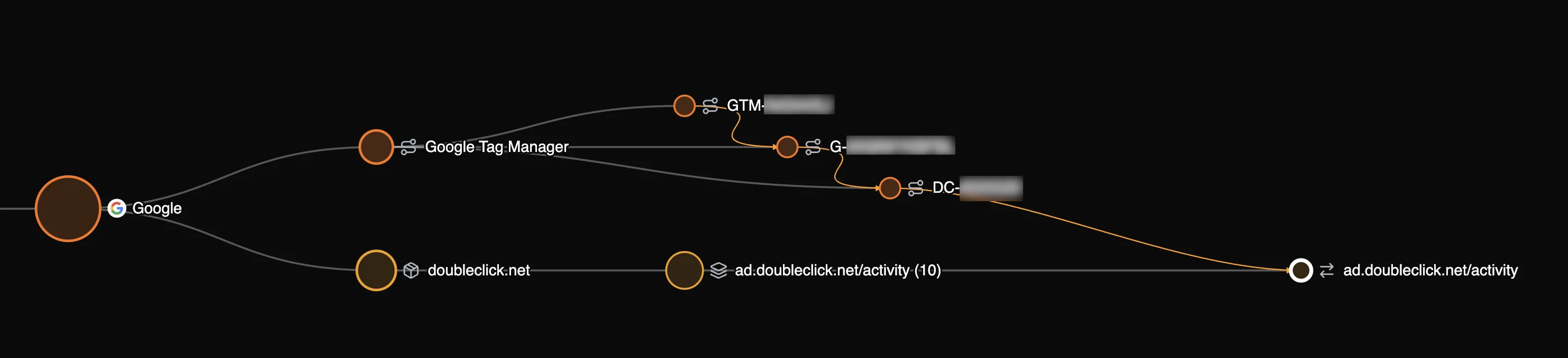
MANTIS maps browser activity as a causal request flow, connecting requests back to scripts, initiators, tag behavior, and available stack traces.
Trace requests to the browser action, script, or prior request that initiated them.
Read request behavior as a structured tree instead of a flat chronological log.
Use available stack trace context to support deeper technical investigation.
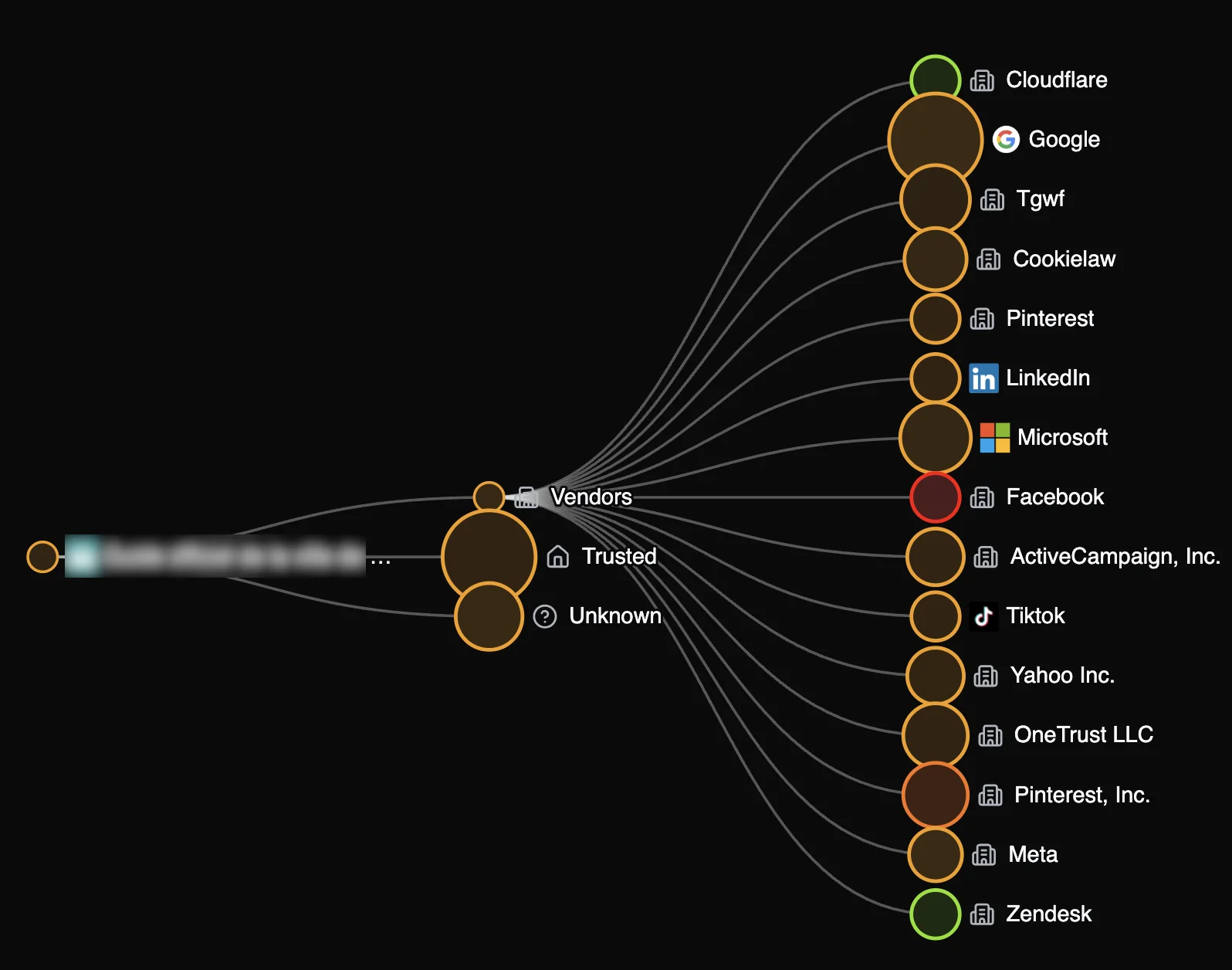
Structured enrichment helps analysts move from raw domains to vendor intelligence, product classification, legal category signals, and risk review cues.
Map requests to known vendors and products where classification is available.
Surface privacy-relevant categories that support review, not legal certification.
Use scrubbed request signatures to classify unknown or ambiguous patterns.
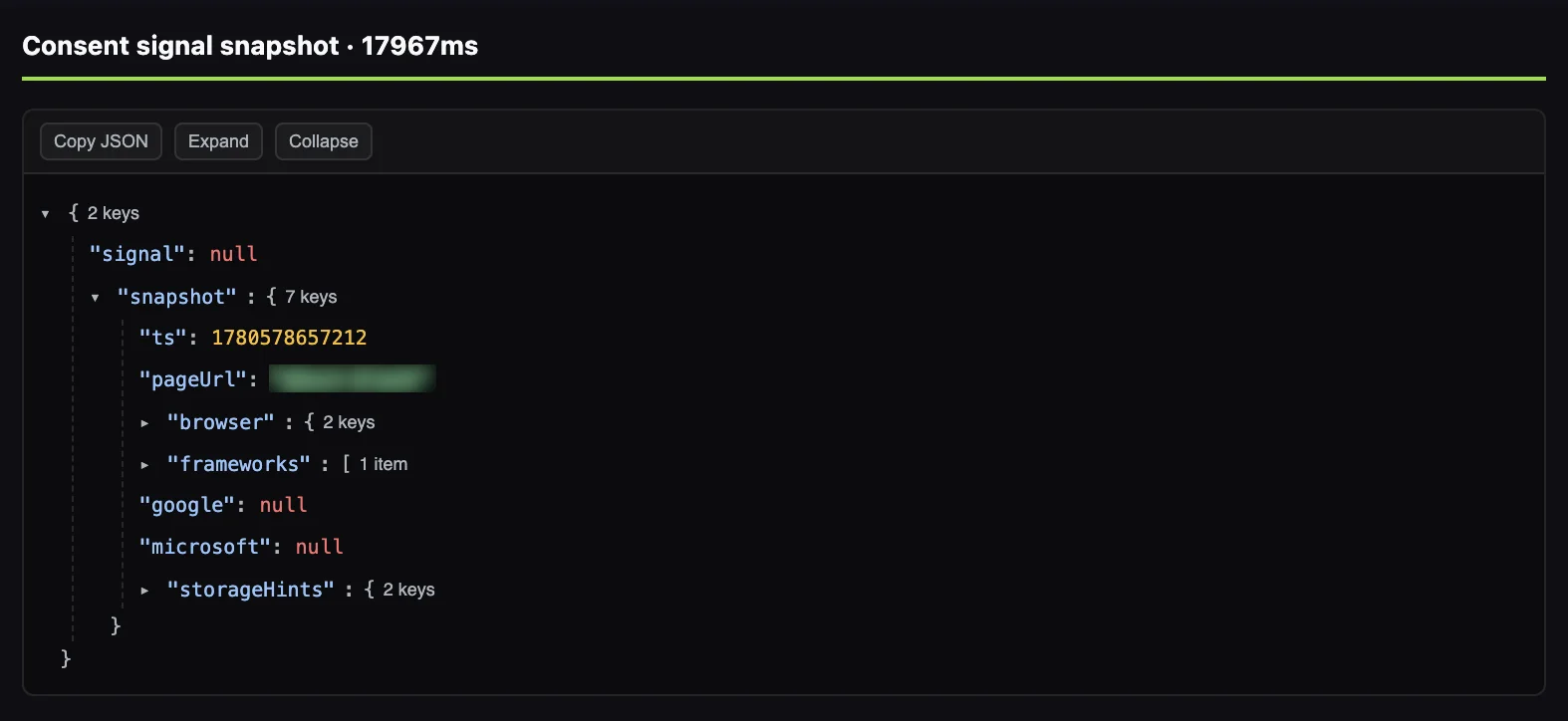
Timeline and consent signal analysis help reviewers compare what happened before consent, after consent, and after specific interactions.
Place request activity in sequence for page loads and interaction-driven events.
Inspect browser and CMP-related consent state where signals can be observed.
Identify requests that may require closer review because they fired before consent.

The Practitioner roadmap focuses on turning observations into audit files with statuses, notes, overrides, exports, and report-ready findings.
Organize reviewed page loads, proof of record, rationale, and analyst notes.
PlannedExport CSV, JSON, DOCX, findings, and remediation recommendations as the workflow matures.
PlannedStandardize team review with workspaces, approval workflow, audit trail, and templates.
On the roadmap